

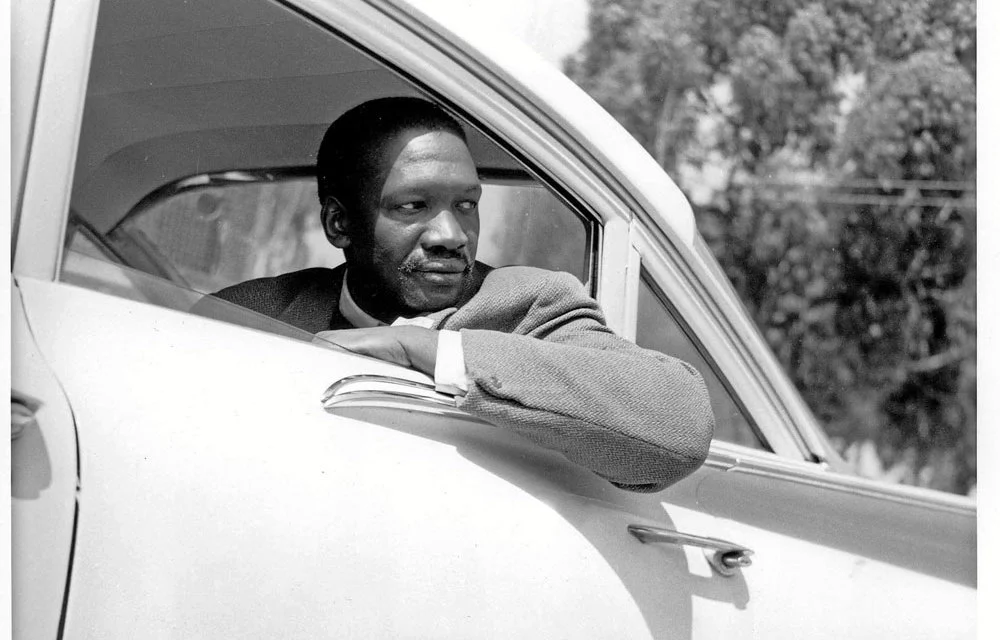
HONORING A VISIONARY LEADER: REFLECTING ON THE LIFE AND LEGACY OF ROBERT SOBUKWE IN HIS CENTENARY YEAR
“Beside the sense of a common historical fate that we share with the other countries of Afrika, it is imperative, for purely practical reasons that the whole of Afrika be united into a single unit, centrally controlled. Only in that way can we solve the immense problems that face the continent people” – Robert Sobukwe. Today, the 5th of December 2024 would’ve been Robert Sobukwe’s 100th birthday. As we celebrate the centenary of Robert Mangaliso Sobukwe, we reflect on the life, philosophy, and enduring legacy of one of South Africa’s most remarkable yet underappreciated liberation leaders. African struggle icon and passionate advocate for Pan-Africanism, Sobukwe’s contributions to South Africa’s struggle against apartheid remain a powerful source of inspiration for activists, academics, and freedom fighters worldwide.
African Struggle Icon: Robert Mangaliso Sobukwe
Affectionately known as ‘Prof’, Robert Mangaliso Sobukwe was born on December 5, 1924, in the village of Graaff-Reinet. His journey began in humble circumstances, where his father worked as a municipal labourer and a part-time woodcutter, while his mother worked as a domestic worker and cook at a local hospital. His exceptional academic abilities earned him a place at Fort Hare University – this is where he was exposed to ideas that would later shape his vision for a united and liberated Africa. It was his study of Native Administration that aroused his interest in politics. Sobukwe’s curiosity in politics also sparked an interest and his drive to becoming a prominent voice in student activism. This new focus on politics was influenced by one of his lecturers, Cecil Ntloko, who was a member of the All African Convention. Fort Hare was a key place for young Black South Africans and students from other African nations to engage in politics, which motivated Sobukwe to become more politically active. “He was not only a towering intellectual, he was a philosopher, a kind of person who had great foresight. I think while the family had a great positive influence in his worldview, also the society he emanates from influenced his worldview”, says Pan-African activist and academic, Thand’Olwethu Dlanga.
In 1948, Sobukwe and three friends started a daily paper titled Beware, focusing on non-collaboration and criticizing the Native Representative Councils. That same year, he joined the African National Congress Youth League (ANCYL), founded by lecturer Godfrey Pitje. Initially, Sobukwe and his peers doubted the ANCYL, thinking the ANC had weakened by cooperating with the councils.
Sobukwe became president of the Fort Hare Students’ Representative Council (SRC) in 1949, showcasing his skills/eloquency as a public speaker. Later in December, he was appointed National Secretary of the ANCYL.
In 1950, he taught at Jandrell Secondary School but was briefly dismissed for supporting the Defiance Campaign. After moving to Johannesburg in 1954, he lectured in African Studies and criticized the ANC’s leadership. He completed his Honours dissertation in 1958. “He was not only a towering intellectual, he was a philosopher, a kind of person who had great foresight. I think while the family had a great positive influence in his worldview, also the society he emanates from influenced his worldview”, says Pan-African activist and academic, Thand’Olwethu Dlanga.
His early life highlights how academics and intellectual engagement can ignite a profound commitment to justice and equality.
A Leader of Vision: Founding the PAC
Sobukwe’s key political achievement was founding the Pan Africanist Congress (PAC) in 1959 after leaving the African National Congress (ANC). The African struggle icon opposed the idea of collaborating with oppressive systems and stressed African unity and self-determination. This was evident in the PAC’s anti-pass campaign, leading to the Sharpeville Massacre on March 21, 1960. Although his leadership was non-violent, the event highlighted how brutal the apartheid era was. Sobukwe was imprisoned under the Sobukwe Clause, yet his resilience made him a symbol of defiance and dignity.
When asked of some of the challenges the PAC faced during apartheid, Pan-African activist and academic, Thando’Olwethu Dlanga said, “Interestingly, the PAC during Sobukwe’s period attracted all forms of people. This on its own had its own challenges. However, Sobukwe was a wonder (uMangaliso) of the almighty, his peers respected him even though some of his comrades took advantage of his honesty. I would say, through his ability to reconcile diverging ideas into a cogent strong idea, he was able to earn the respect of many to lead them.”
Sobukwe’s Pan-African vision
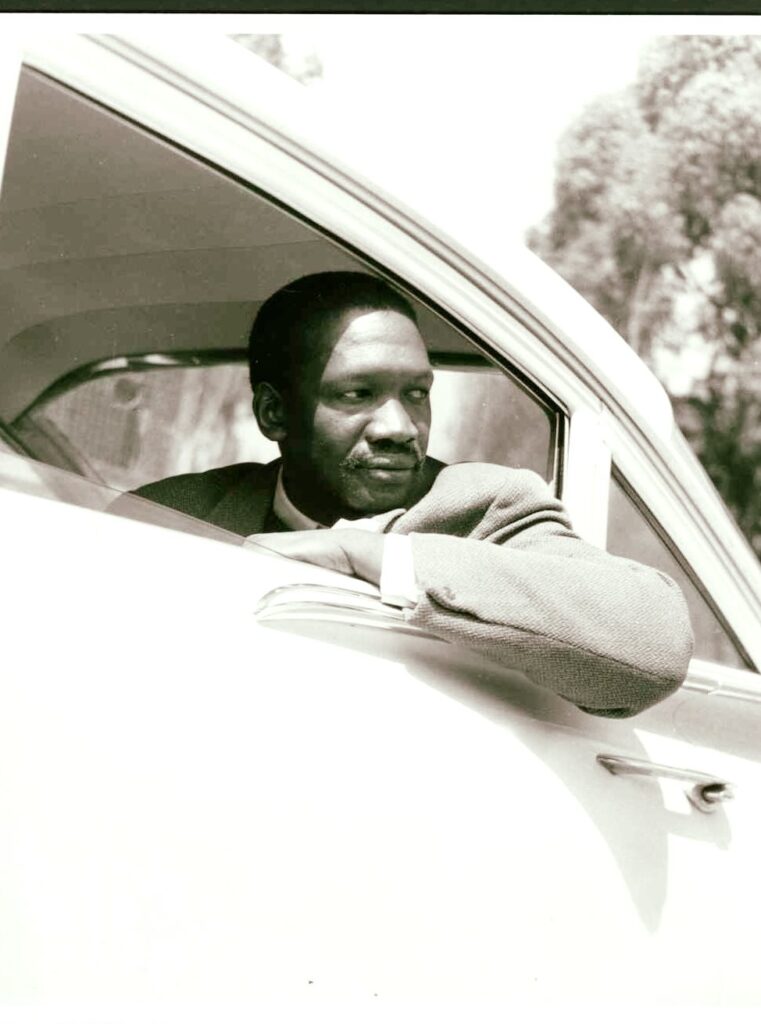
At the core of Sobukwe’s ideology was Pan-Africanism – a belief in the unity and liberation of all African peoples. He envisioned a continent free from colonial domination, where Africans could reclaim their dignity and identity. In today’s context, Sobukwe’s vision remains relevant, particularly as Africa struggles with issues like inequality, xenophobia, and neocolonial exploitation. His call for unity challenges modern political leaders to prioritize solidarity over division and to work toward a truly decolonized Africa.
The Sobukwe Clause: A Testament to His Influence
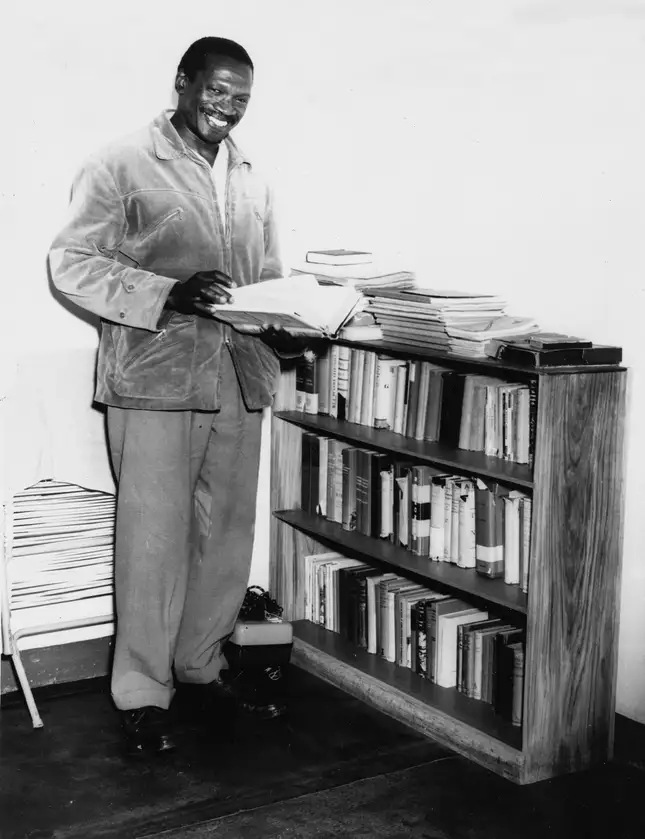
Sobukwe’s legacy is perhaps most poignantly captured in the extraordinary lengths the apartheid regime went to suppress him. On 4 May 1960, Sobukwe was sentenced to three years in prison for encouraging Africans to protest against the pass laws. He did not appeal the sentence, believing the court had no authority over him. After completing his sentence on 3 May 1963, a law known as the ‘Sobukwe Clause’ was passed, allowing the Minister of Justice to extend the detention of political prisoners indefinitely. Sobukwe was transferred to Robben Island, where he spent an additional six years in solitary confinement, though he had access to books and civilian clothes, ultimately earning a degree in Economics from the University of London. He was later denied permission to accept a job offer in the US. Released in May 1969 and placed under house arrest in Galeshewe with his family, he faced further restrictions when he tried to apply for a teaching position in the US and when seeking to leave the country permanently in 1971.
A few years later, in July 1977, Sobukwe sought permission for medical treatment in Johannesburg with the help of a family friend, Benjamin Pogrund. On the 9th September, he was allowed to leave his place of residency under strict conditions. He was diagnosed with serious lung cancer and moved to Groote Schuur hospital in Cape Town, where only family could visit him. Sobukwe’s wife requested permission for him to stay with Bishop Pat Matolengwe, but the government delayed approval. He was temporarily discharged on 14 October. Despite his health, the government imposed restrictions. Sobukwe died on 27 February 1978, and his funeral was on 11 March 1978.
Celebrating Sobukwe’s Centenary
Sobukwe’s centenary presents a unique opportunity to reignite discussions about his life and ideas – specifically how people can use his ideas and legacy as reference to dealing with the challenges the African continent faces to this day. Events such as lectures, exhibitions, and community dialogues can bring his legacy to the forefront. Pan-African activist and academic, Thand’Olwethu Dlanga expressed how people can celebrate and honour the African struggle icon’s legacy and centenary year: “While ‘Prof’ was a towering figure, I don’t think he fancied hullaballoo type of things. I think he believed in tangible impact. I would say, the greatest centennial gift one could give to Sobukwe, is to ensure that he and his legacy does not trail the ground. Young people to be specific, they can celebrate Sobukwe by imbibing themselves on his philosophies and worldview, his character and resolve. In celebrating his centennial, more genuine disciples of the Sobukwe cause must emerge.”
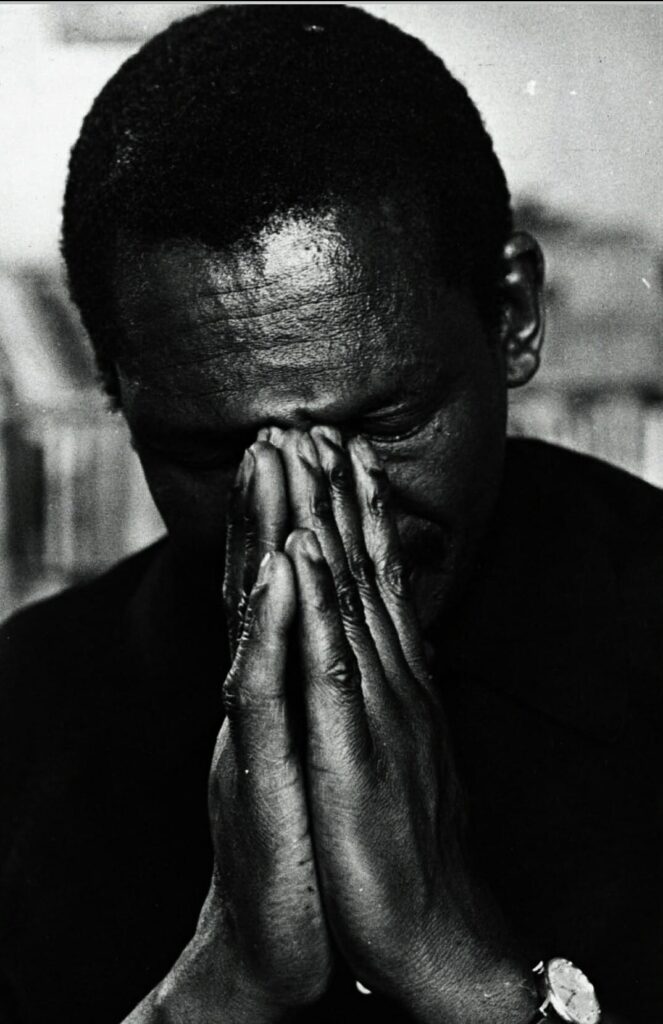
To further celebrate his centenary, Dlanga added that the Sobukwe family and the Robert Mangaliso Sobukwe Trust (RMST) are working on projects to honour Robert Sobukwe. RMST participated in a UNISA conference for Sobukwe’s centennial and has been involved in media publications about the year. They are discussing renaming Graaff-Reinet to Robert Sobukwe and contributed to the play ‘Lala Ngenxeba’. Fort Hare University will host a centennial lecture in December 2024, and the family asked Healdtown High School to make Sobukwe’s former room he used as a headboy to be a heritage site. Lastly, the EC government is planning to have a Robert Sobukwe centennial dialogue in Graaff-Reinet in the middle of December 2024.
Final Thoughts
In a world where we’re still grappling with systemic inequality, Sobukwe’s legacy and lessons are of great reference. His unwavering commitment to liberation and non-collaboration reminds us of the power of integrity in the face of injustice. His belief in African unity challenges contemporary activists to address divisions that hinder progress. Sobukwe’s story is a testament to the enduring power of vision and conviction in the pursuit of freedom.
As we celebrate 100 years since the birth of Robert Sobukwe, we are reminded that his legacy is not confined to the past—it is a call to action. His vision of a liberated and united Africa remains a beacon of hope even to today’s generation, urging us to confront the challenges of our time with courage and determination. By honouring his memory and learning from his example, we can ensure that Sobukwe’s dream of a free and dignified Africa continues to inspire and guide us.

Leave a Reply