

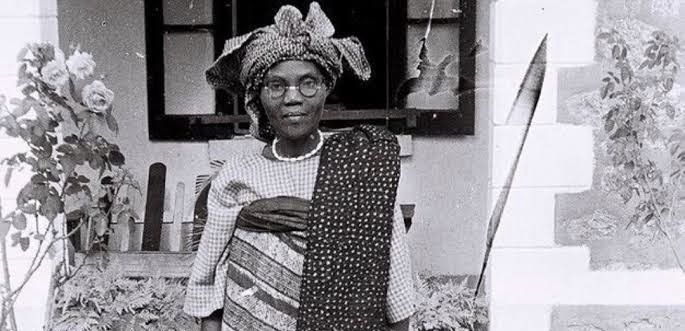
Olufunmilayo Ransome-Kuti: Women Pan-Africanism & Breaking Barriers
“To be a good politician you must be wise like a snake, calm like a dove, and kind like an angel” – Olufunmilayo Ransome-Kuti. That’s exactly how Nigerian educator, political campaigner, and women’s rights activist Olufunmilayo Ransome-Kuti stood firm for the rights of others. The pioneering figure made immense history in African feminism/Pan-Africanism and anti-colonial activism. The history and evolution of feminism is a true testament to how women like trailblazer, Olufunmilayo Ransome-Kuti are a force to be reckoned with.
On the 31st of July, it’s Pan-African Women’s Day, a day we lay out the red carpet and celebrate the foremothers on the African continent. Trailblazer, Olufunmilayo Ransome-Kuti is one of the women that laid the foundation not only for advancing women’s rights in Nigeria but across the African continent as well, making her a prominent figure in the Pan-African feminist movement.
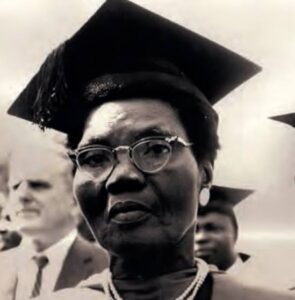
Where it all started: Early life & Education
On October 25, 1900, in Abeokuta, Nigeria, is where it all started. Olufunmilayo Ransome-Kuti, also known as Funmilayo Ransome-Kuti was born on October 25th, 1900, in the city of Abeokuta, Nigeria. Funmilayo was the daughter of Daniel Olumeyuwa Thomas and Lucretia Phyllis Omoyeni Adeosolu. Her parents held education at a prestigious level, which significantly played a role in Funmilayo’s future activism. Before furthering her studies in England 1919 at Wincham Hall Schools for Girls in Cheshire, Funmilayo was the first female to enrol at the prestigious Abeokuta Grammar School and one of the first women in Nigeria to receive Western education.
Married life & children
Funmilayo got married to Israel Oludotun Ransome-Kuti in 1925. Oludotun was an educationist and co-founder of the Nigeria Teachers Union. The couple were blessed with four children: Dolupo, Olikoye, Olufela (Fela), and Beko, while working as teachers.
Advocacy & Activism
The beginning of her journey to playing a pivotal role in Pan-African feminism started when she made her return to Nigeria. Post her return, Funmilayo became more involved in social and political issues. Education was something of high value in her family and to her personally, leading to her involvement in championing the cause for women’s education in the 1930s. Her role as a teacher in the 1930s was proof enough to her of how education is a powerful tool that women should also have access to. Funmilayo’s belief in the power of education as a tool for liberation was a recurring theme throughout her life.
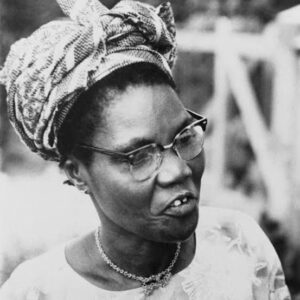
The trailblazer established an organisation in 1946 with the goal of redressing the injustices experienced by Nigerian women. In keeping with her roots, the organisation was named the Abeokuta Women’s Union (AWU). The AWU fought against discriminatory taxation, colonial rule, and unfair taxes, growing rapidly to become a formidable force that would forever alter the course of feminism. One of the prominent campaigns led by Funmilayo was the anti-tax protest where women protested unfair taxation and the misuse of tax revenues, further extending to the protest against the lack of women representation in decision-making processes. This campaign was directed at unfair colonial authorities and local chiefs. Post the success of the protest, the taxation system was later suspended and one of the traditional rulers, Alake of Egbaland was forced to step down.
The union expanded to over 20,000 members under Funmilayo’s direction, staging rallies and demonstrations to draw attention to the difficulties faced by women living under British colonial rule.
In her determination to break barriers and societal norms, Funmilayo became the first African woman to own and drive a car in a country/world where driving was considered more of a male activity. This wasn’t just a challenge to break barriers, but a step in the right direction, to advocate for equality and progress for women, as gender equality was and is still a factor in the 21st century, but women such as Funmilayo have inspired women to break barriers.
Pan-Africanism & International influence
Funmilayo’s activism crossed the borders of Nigeria, the pioneer extended her activism by advocating for Pan-Africanism. She believed in the power of unity and solidarity amongst African nations and the people within the countries. Her work required her to travel to different parts of the world, enabling her to meet other activists who share the same vision with her. Funmilayo’s traveling and meetings with various activists also allowed them to discuss strategies/ways of combating colonialism and promoting African independence.
In 1947, she got an invitation to attend the Women’s International Democratic Federation in Paris, where she represented Nigerian women on an international stage. This experience cemented her reputation as a global advocate for women’s rights and anti-colonialism. Funmilayo was also a member of the Nigerian delegation to the London Constitutional Conference in 1953, with the purpose/goal of negotiating Nigeria’s path to independence.
Legacy & Impact
On April 13, 1978, Funmilayo Ransome-Kuti passed on after succumbing to the wounds received during a military raid on her son Fela Kuti’s family home in Lagos, Nigeria. The Nigerian military carried out the attack, allegedly in retaliation for Fela’s vocal criticism of the administration. During the attack, Funmilayo was thrown from a second-story window, suffering horrific injuries from which she eventually died.
Olufunmilayo Ransome-Kuti left behind a significant and enduring legacy. The pioneer, often referred to as the “Lioness of Lisabi,” possessed an unwavering spirit that endures to this day. The contributions Olufunmilayo Ransome-Kuti made to Pan-Africanism and feminism are still honoured today. Her relentless commitment to advancing social justice, women’s rights, and African unification has had a lasting impact on history. An example of her unquestionably shape-shifting legacy lies in the fact that she is the mother of renowned human rights campaigner Beko Ransome-Kuti and iconic musician and activist, Fela Kuti.
Her body of work demonstrates the effectiveness of community organising and the value of education in bringing about social change. This Pan-African Women’s Day, we honour Olufunmilayo Ransome-Kuti as one of the most significant individuals who battled against colonialism and for women’s equal rights, making her an inspiration to women/feminists, activists, and Pan-Africans across the world.


Leave a Reply